Nota: En esta página se muestra una vista previa con la estructura de los componentes. Para visualizar el diseño final, haga click en el botón "Previsualizar contenido".
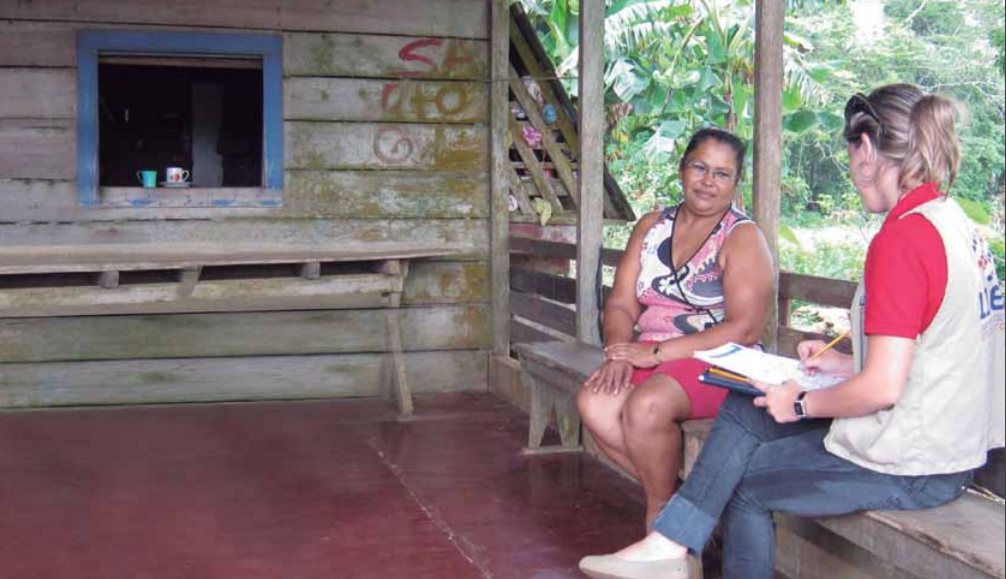
The National Household Survey (ENAHO) is a data collection program whose focus is linked to the population’s level of well-being, particularly centered on the composition of household income, its distribution, and the characteristics of households and the population living in poverty. The survey also includes the study of housing tenure and its characteristics, individuals’ access to education and social security, as well as the working population and the conditions of their employment, among other topics. Likewise, each year specific studies or special modules are conducted, which may include access to social programs, use of health services, telecommunications, child labor, migration, citizen security, and breastfeeding.
The survey is conducted in July of each year and provides information at the national and regional levels, as well as for urban and rural areas.
Household surveys are part of a permanent program that began in 1976. Since then, two methodological and conceptual updates have been carried out: one in 1987, which marked the beginning of the Multiple Purpose Household Survey, and another in 2010, when the National Household Survey was introduced. Accordingly, three survey periods are established: 1976–1986; 1987–2009; and 2010 to the present. Due to the methodological changes across these periods, the data series are not strictly comparable between them.
In this section, users will have access to methodological documents and digital publications.
Listado de Documentos
- Surveys
- National Household Survey